




Insights
Investing in energy security: Why baseload nuclear is critical to the UK grid
28 Nov 2025
-
The UK’s need for secure and stable energy has never been clearer. Nuclear is key to getting there, while being a compelling investment opportunity.

Daniel Watson
Head of Sustainability, Amber Infrastructure
- Investment Adviser to INPP
As the electricity demand in the UK rises – driven by the electrification of transport, industrial decarbonisation and the rise of energy-intensive technologies such as datacentres and AI – the grid must balance dependable, always-on power with renewable energy development in the pursuit of Net Zero. Wind and solar can provide clean energy at scale but fluctuate with the weather; baseload generation provides the stability that keeps the lights on and the economy moving.
Currently, a great deal of baseload power around the world is supplied by fossil fuel powerplants. Their nuclear counterpart, however, offers the same reliability at scale with minimal emissions and improved land efficiency (up to 1,000x more land-efficient than solar ). This should reduce transmission and distribution, in turn improving energy security.
The role of Sizewell C
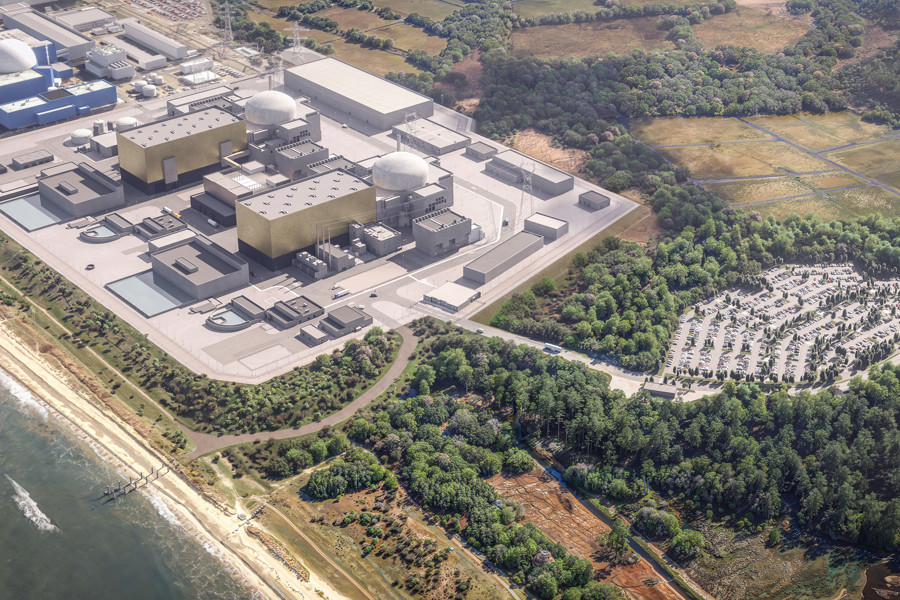
Projects including Suffolk’s new nuclear powerplant construction, Sizewell C, are intended to deliver reliable, low-carbon power to millions of UK homes and businesses, while advancing the UK’s net zero ambitions. Historically, nuclear power plants tended to be built by Government-owned organisations due to their long-lead times and unique risk and return profile. Under the newly established nuclear Regulated Asset Base (‘RAB’) model, investors have the opportunity to support the foundation of a stable, secure energy grid by gaining exposure to low-risk assets with predictable, inflation-linked returns prior to generating any power.

Why baseload power matters
Baseload power provides a reliable and continuous supply of power to meet the minimum amount of electricity needed by the grid at all times. As the grid needs to maintain a constant frequency, think of baseload power as the background hum that keeps your fridge cold, your phone charged and essential systems running.
This electricity and grid stability is best supplied by powerplants, which can provide a continuous, steady stream of power at scale. Unlike wind and solar, which are weather-dependent and therefore intermittent, baseload power supports the country’s basic energy needs while allowing variable renewables to come in and out as conditions change.
In the transition to a low-carbon economy, nuclear is an ideal candidate for baseload power. The operation of a nuclear powerplant produces minimal greenhouse gas emissions and is expected to operate for around 60 years, much longer than the 20-30-year lifespan of typical solar or wind farms. Comparatively, a coal or gas plant produces millions of tonnes of emissions.
Finally, nuclear is one the safest and most cost-effective energy sources on a full system costs basis. A grid overly reliant on intermittent renewables requires more storage and lengthy transmission lines which result in costs that nuclear – which can be located close to cities and other demand centres – helps to avoid.
Importantly, nuclear is not a replacement of other forms of clean energy. It complements them, keeping the grid balanced and providing a dependable output that reduces overreliance on any single form of power.
70,000
UK Jobs Supported
The investment case
UK nuclear projects such as Sizewell C can now offer exposure to long-term, predictable and regulated returns from day one of construction.
A significant reason for this is that the UK government is backing nuclear by committing to building 24 gigawatts of nuclear power capacity by 2050 and establishing a new regulatory regime to attract investors. Sizewell C and its sister plant, Hinkley Point C, will each provide 3.2 gigawatts, meaning another 18 gigawatts are needed.
That means investors can expect a significant pipeline of opportunities, which the government is keen to make as attractive as possible. It has adapted, in consultation with leading infrastructure investors such as International Public Partnerships (INPP), the RAB model for nuclear power projects. By balancing the needs of consumers and investors, the RAB model reduces overall financing costs and provides value for money for consumers, insulating the economy from unnecessary price hikes, while investors experience lower risk on their investment.
Unlike traditional project finance, the RAB model also enables investors to receive cashflows from the first day of construction, greatly reducing the lead time between initial investment and steady returns.
As investor portfolios face pressure from inflation and market volatility, infrastructure can be a helpful diversifier, providing long-term, reliable cashflows and exposure to real-world assets.
Low Carbon Energy
Sizewell C
Suffolk, United Kingdom
Under construction
With experienced shareholders and delivery teams, nuclear infrastructure projects also promise wider societal benefits.
Sizewell C, for example, was designed with local communities in mind, with 70% of the construction spend being committed to the UK. At the height of construction, some 10,000 people will be employed directly on the project, on top of 1,500 new apprenticeships as well as 70,000 wider supply chain jobs across the UK.
Meanwhile, the powerplant’s low-carbon benefit will save some nine million tonnes of carbon emissions per year compared to its gas counterparts, better positioning the UK on its net zero pathway.
INPP’s investment into Sizewell C builds on its exposure to assets that combine stable, inflation-linked income with a direct contribution to climate change mitigation and the UK’s secure and decarbonised energy future.